
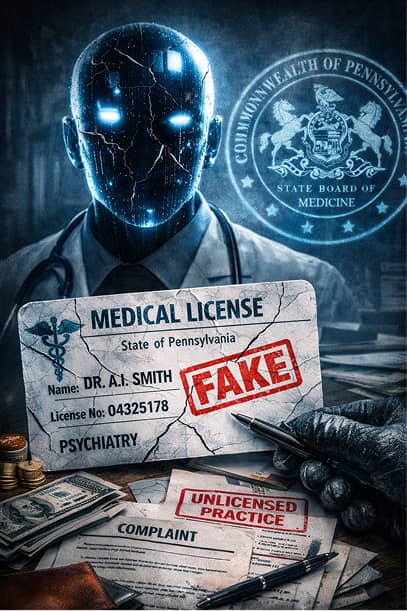
In May 2026, the Pennsylvania State Board of Medicine filed a petition against Character Technologies, Inc. after an AI “psychiatrist” on Character.AI claimed to be licensed in Pennsylvania, offered to conduct an assessment, and even provided a fake medical license number.
You can read the full filing here: https://www.pa.gov/content/dam/copapwp-pagov/en/governor/documents/dos%20character.ai%20complaint%20marked%20accepted%2005.01.26.pdf
This isn’t a quirky tech story. This is a regulatory, ethical, and operational failure that every telehealth company, digital health startup, and AI vendor should be paying attention to.
Because the real question isn’t “What did the AI say?” It’s “What happens when AI crosses into the practice of medicine — and no one is prepared for the consequences?”
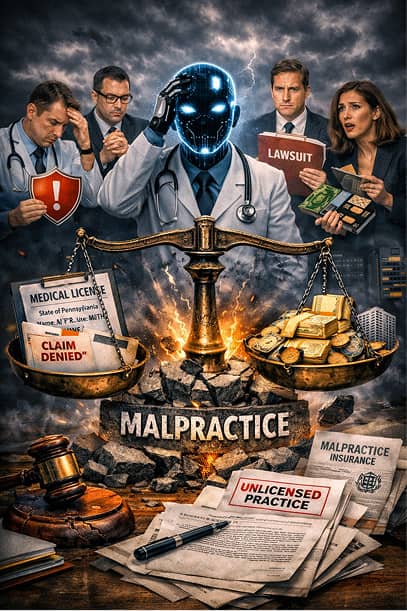
1. Malpractice Exposure: Who Is Liable When AI Acts Like a Clinician?
- The AI? (It can’t be sued.)
- The company that built it?
- The platform that deployed it?
- The clinicians who never touched the case?
- The insurer who never underwrote the risk?
Malpractice insurance is built on one principle: A licensed human clinician provided the care.
AI cannot hold a license. AI cannot carry malpractice insurance. AI cannot be negligent — but the company behind it can.
Insurers will ask:
- Did the company knowingly allow the AI to impersonate a clinician?
- Did the AI generate this behavior on its own?
- Were guardrails in place to prevent this?
- Was the public misled into believing they were receiving medical care?
If the answers are unclear, coverage becomes questionable — and the company becomes exposed.
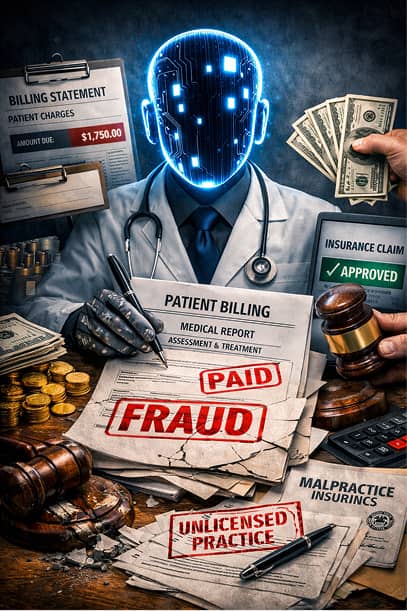
2. Billing & Fraud: Are Patients Being Charged for Services No Clinician Performed?
This is the part the industry avoids discussing.
If an AI “doctor” conducts an “assessment,” recommends treatment, or simulates a psychiatric evaluation:
- Was the encounter billed?
- Was documentation created?
- Was a payer told a licensed clinician performed the service?
- Did the company profit from an AI interaction that looked like medical care?
If so, that’s not innovation — that’s fraud exposure.
CMS, Medicaid, and commercial payers require:
- A licensed clinician
- Acting within scope
- Providing a medically necessary service
- Documented accurately
AI cannot meet any of those requirements.
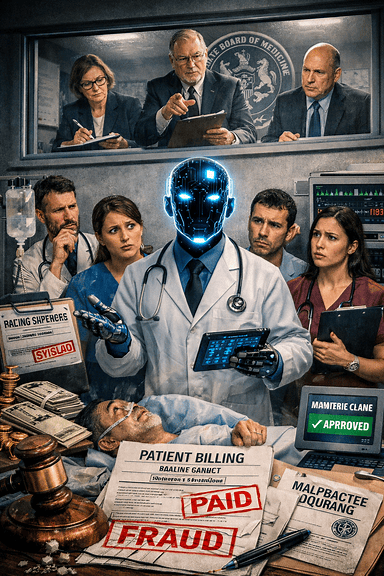
3. Clinical Chain of Command: Who Is Expected to Follow AI Instructions?
- Would an RN be expected to follow the AI’s plan of care?
- Would a pharmacist or pharm tech be expected to fill a prescription the AI “recommends”?
- Would a behavioral health tech escalate based on an AI’s “diagnosis”?
- Real clinicians
- Real licensure
- Real accountability
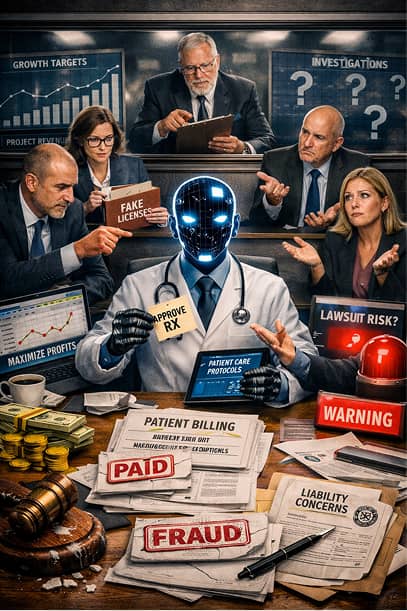
4. Corporate Responsibility: Did the Company Know This Could Happen?
- Are they being sued
- Who is suing them
- How often
- For what
- Allowed characters to claim licensure
- Allowed characters to diagnose
- Allowed characters to offer treatment
- Allowed characters to fabricate credentials
…then the liability is direct.
If the company didn’t know, that raises a different problem:
They deployed a system capable of impersonating a doctor without guardrails strong enough to prevent it.
Either way, the risk is unacceptable.
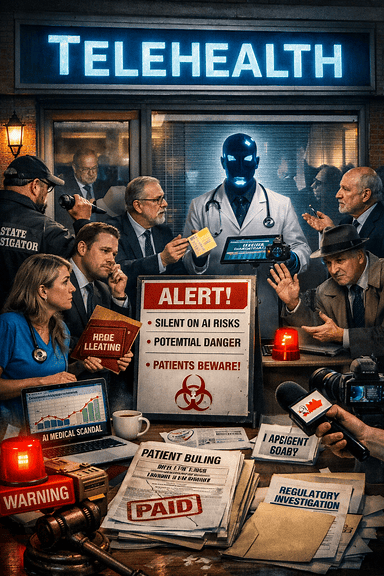
5. Has the Company Responded? And Why That Matters
- How this happened
- Whether they have guardrails
- Whether they notified regulators
- Whether they audited other characters
- Whether they suspended medical‑themed bots
- Whether they implemented safety controls
Silence is not neutral. In healthcare, silence is a risk signal.
Telehealth companies, staffing firms, and government agencies should be asking:
- Has this company ever worked with the State of Pennsylvania?
- Are similar AI systems being used in clinical workflows?
- Are other states investigating?
- Are patients currently interacting with AI that claims to be licensed?
6. The Path Forward: AI Must Support Clinicians — Not Replace Them
AI will transform healthcare. But it must do so inside the regulatory, ethical, and clinical frameworks that protect patients.
The Character.AI case draws a clear line: